


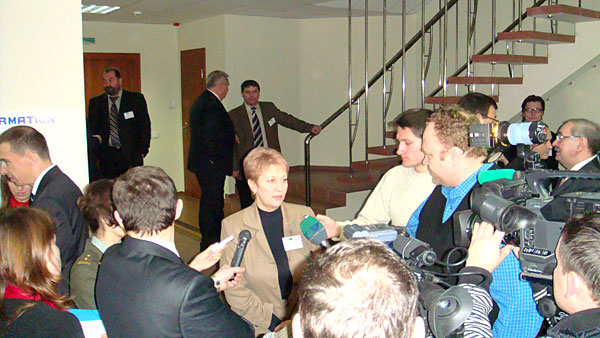
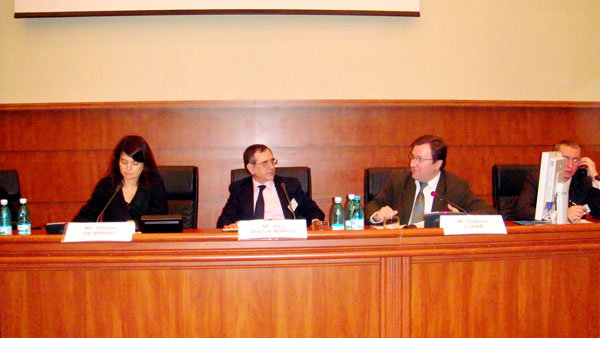
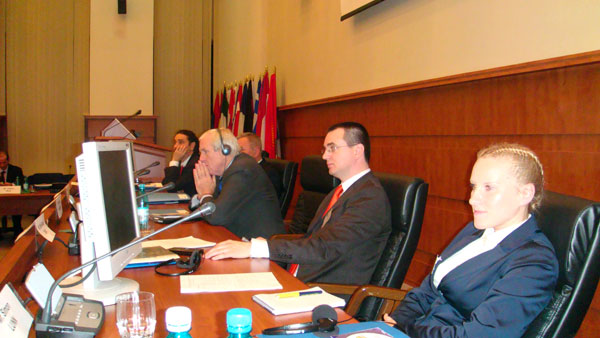
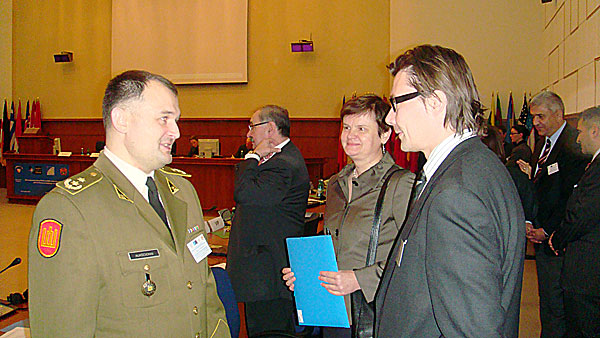
The International Workshop on Enhancing Cooperation of Moldovan Public Authorities with the Media and Civil Society on Combating Terrorism was organized by the Pro Marshall Center of the Republic of Moldova in cooperation with the Ministry of Defence of the Republic of Moldova, North Atlantic Treaty Organization (NATO) and Geneva Centre for the Democratic Control of the Armed Forces (DCAF).
The purpose of this international workshop was to discuss relations between relevant Moldovan public authorities, the media and the civil society in combating terrorism in order to identify ways to strengthen their cooperation.
Objectives
To raise awareness of the Moldovan media and civil society of the requirements for combating terrorism;
To facilitate a common understanding by Moldovan state institutions, representatives of the media, and civil society on the development and implementation of national anti-terrorist policies;
To offer a venue for international information sharing on good practices, and guidelines for enhancing cooperation of state institutions with the media, and civil society;
To generate advice on practical steps that might be taken by Moldovan authorities to strengthen cooperation between public authorities, the media, and civil society in combating terrorism.
Workshop Agenda included three sessions:
Session I: Current Developments in Combating Terrorism. Contribution of the Republic of Moldova to the fight against terrorism.
This session addressed the current terrorist threat, and how it affects international and national security. The various strands of the fight against terrorism were also addressed in this session. This session enabled Moldovan public authorities to present their contribution to the fight against terrorism. Against this backdrop, representatives of the Moldovan media and civil society shared with the audience their perception of the Moldovan contribution to anti-terrorism efforts.
In the first session were presented reports by experts from NATO IS, Defence Policy and Partnership, NATO Centre of Excellence Defence Against Terrorism, Ankara (Turkey), Antiterrorist Center of the Republic of Moldova and Journalistic Investigation Center from Moldova.
Session II: Building Stronger Cooperation between Moldovan State Institutions, the Media, and Civil Society.
This session aimed at sharing national and international experiences on best practices and lessons learned from enhancing cooperation with the media and civil society more broadly. It also aimed at charting current and future Moldovan public institutions’ efforts to interact with the national and international media and civil society. International experts offered Moldovan participants suggestions on building a public-media-civil society partnership.
In the second session were presented reports by experts from NATO IS, Press and Media, Geneva Centre for the Democratic Control of the Armed Forces (DCAF), Committee on Civil Dimension of Security, NATO Parliamentary Assembly, Audio-Visual Media Coordinating Council from Moldova and Moldovan Independent Expert.
Session III: Enhancing Cooperation of Moldovan State Institutions with the Media, and Civil Society in Combating Terrorism.
This brainstorming session aimed at providing food for thought for future efforts of the Moldovan participants to enhance cooperation between Moldovan state institutions and the media, and civil society in combating terrorism. It focused on providing suggestions on how the relevant Moldovan institutional arrangements, procedures, and practices might be improved to raise general awareness among the wider public on Moldovan efforts to fight against terrorism; improve the involvement of civilians in shaping and implementing counter-terrorist policies; enhance media reporting in terrorist emergency situations; and counter extremist factions in the media.
In the third session were presented reports by experts from Geneva Centre for the Democratic Control of the Armed Forces (DCAF), OSCE, Action against Terrorism Unit, Romanian Intelligence Service, and Counterterrorist Centre of the Security Service of Ukraine.
Target audience consisted up to 70 representatives of state institutions involved in combating terrorism, of the main national media outlets, and of the civil society involved in foreign and security affairs, representatives of diplomatic missions accredited in Chisinau, as well as experts from NATO and selected PfP countries, the OSCE, and the NATO Parliamentary Assembly.